
What is breast implant illness?
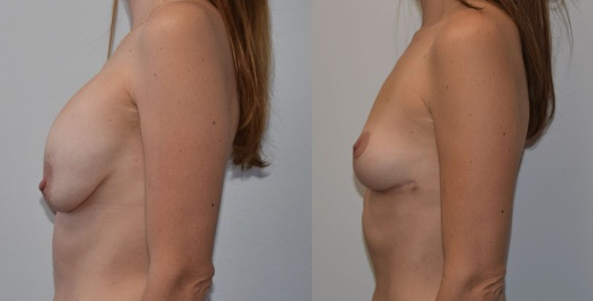
Breast implant illness is the name of a group of systemic symptoms in patients who have breast implants. Common symptoms include fatigue, joint pain, muscle aches, weakness, blurred vision, and memory issues, although patients may report other symptoms as well. There is no specific test for breast implant illness for explant patients in Los Angeles and other locations, which makes it frustrating for both patients and physicians. Often, patients with breast implant illness will see many doctors and undergo numerous tests and imaging studies, with no apparent abnormal results. However, breast implant removal often leads to symptom improvement! In general, there are 3 theories about why this may be occurring: the inflammation theory, the biofilm theory, and the Autoimmune Syndrome Induced by Adjuvant (ASIA) theory.
Inflammation Theory of Breast Implant Illness
The inflammation theory of breast implant illness is the idea that an implant causes inflammation. Certain patients may be more susceptible to this inflammation, which could explain some of the symptoms that they feel. Logically, this seems to makes sense because implants are a foreign body and while silicone is chemically inert, it is not biologically inert meaning that it does have an effect on the body. This was demonstrated by recent studies that have shown that women who have silicone breast implants can have increased levels of pro-inflammatory genes expressed in the breast tissue near the implants. Although a concrete link between the symptoms that patients feel and the pro-inflammatory gene expression has not been established, this is an active field of investigation and research studies are looking into this area.
Biofilm Theory of Breast Implant Illness
The biofilm theory of breast implant illness is the idea that the silicone or saline breast implants may become colonized by bacteria during breast augmentation. Bacterial colonization is different from infection in that bacteria colonization results in biofilm formation rather than causing fever, redness, and pus. Biofilm are colonies of bacteria that are difficult to remove. They typically exist on the surface of implanted materials such as breast implants or other types of implants. When bacteria are in a biofilm state, they can cause a low level immune system activation which may lead to symptoms similar to what breast implant illness patients experience.
Autoimmune Syndrome Induced by Adjuvant (ASIA syndrome)
The autoimmune syndrome induced by adjuvant theory of breast implant illness is the idea that silicone acts as an adjuvant. An adjuvant is anything that promotes a stronger immune response in the presence of something that would normally cause a more mild immune response. For example, if someone is exposed to an adjuvant while they are sick with a cold, they may have a longer duration of cold symptoms and potentially more severe symptoms. On his podcast, Dr. Hirsch interviewed Dr. Yehuda Shoenfeld, who is the researcher that developed the concept of the autoimmune syndrome induced by adjuvant theory of breast implant illness. To listen and learn more about his theory, click the link below:
Dr. Yehuda Shoenfeld
• Part 1: Breast Implant Illness – Separating Fact From Fiction
A Patient Story w/ Lauren
• Part 2: Breast Implant Illness – Separating Fact From Fiction
A Patient Story w/ Lorena
• Part 3: Breast Implant Illness – Separating Fact From Fiction
What happens to breast implant illness patients after their explant surgery
Fortunately for Los Angeles breast implant removal patients, there are now multiple studies that have shown that women who suffer from breast implant illness do have significant improvement in their symptoms after explant surgery. Although it is not possible to predict what specific symptoms improve as well as the degree or duration of improvement, most patients do experience some improvement. Feel free to browse the studies at the links below:
Study Part 1- Impact of Capsulectomy Type on Post-Explantation Systemic Symptom Improvement
Study Part 2- Heavy Metals in Breast Implant Capsules and Breast Tissue: Findings from the Systemic Symptoms in Women
Study Part 3- Microbes, Histology, Blood Analysis, Enterotoxins, and Cytokines: Findings From the ASERF Systemic Symptoms in Women
Study Part 4- Longevity of Post-Explantation Systemic Symptom Improvement and Potential Etiologies
For more information, visit
1) www.breastimplantillness.com
2) https://www.facebook.com/groups/breastimplantillnesssupportcalifornia/
About Dr. Hirsch
Credentials and Facility Affiliations
Dr. Hirsch is a board certified plastic and reconstructive surgeon based in Sherman Oaks. He specializes in cosmetic and reconstructive breast surgery, including breast implant removal, breast lift, and breast reduction. He is one of the most experienced explant surgeons in Los Angeles and has performed over 1000 explants with total and en bloc capsulectomy. Dr. Hirsch has treated patients from multiple countries, including Canada, Mexico, Costa Rica, Iceland, England, France, and others! He has developed his own technique for implant removal, capsulectomy, and breast lift and has published this technique in medical journals. He is affiliated with Providence Ceders Sinai Tarzana Medical Center and also operates at Avalon Surgery Center in Glendale, both of which are fully accredited.
Explant Surgery Details
Dr. Hirsch is very experienced with explant and capsulectomy procedures and performs over 100-200 each year, with and without a breast lift. Typically, a total or en bloc capsulectomy (without breast lift) takes around 2 hours or so. Total or en bloc capsulectomy with a breast lift is a 3 to 3.5 hour procedure depending on the breast size and implant size. Dr. Hirsch will inspect the pectoralis muscle, and will repair it if necessary. Antibiotics are given intravenously within 1 hour of incision time per standard of care. These surgeries are performed under general anesthesia. He is happy to return implants to the patients if desired, and will take pictures/video as well. Patients may choose to send their capsules to the lab for pathology analysis and take cultures if desired.
In most cases, drains are used during the procedures to help prevent fluid build up (seroma), which can increase inflammation and prolong healing. The drains are removed at the first postoperative visit which takes place one week after surgery.
Post-operative details
The post operative discomfort is worst in the first 24-48 hours and gradually improves with time. By the end of the first 2 weeks, most patients are feeling almost normal and can resume full activities by 4-6 weeks postoperatively.
Call for a consultation
Schedule online today »