
Breast Implant Revision Los Angeles
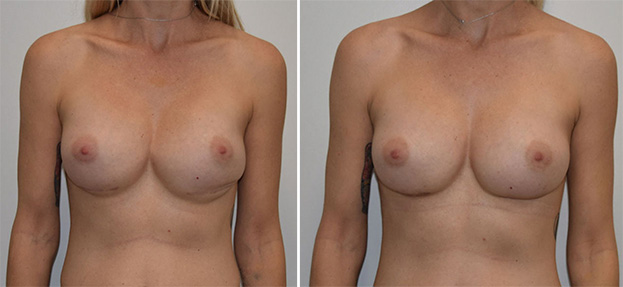
About the Procedure
Breast implants do not last forever. Over time, issues can develop after a prior breast augmentation procedure, including capsular contracture, implant rupture or deflation, implant malposition, and visible asymmetry. In other cases, breast tissue stretches under the weight of the implant, which can contribute to concerns like bottoming out or a “double bubble” appearance.
Dr. Elliot Hirsch treats patients from Sherman Oaks and the greater Los Angeles area for implant revision surgery, implant replacement (implant exchange), and correction of implant-related complications. Depending on your anatomy and goals, revision may include implant removal and exchange, capsulectomy, pocket adjustment (including neosubpectoral techniques), and/or a breast lift (mastopexy) to restore a more balanced, natural breast shape.
Signs You May Need Implant Revision or Implant Replacement
Most patients seek breast implant revision for one of two reasons: (1) to correct a complication, or (2) to improve the look/feel of the breasts as preferences change over time.
- Capsular contracture: hardening or tightening of scar tissue around the implant, sometimes with pain and distortion
- Rupture or deflation: saline implants may deflate noticeably; silicone rupture can be subtle
- Implant malposition: bottoming out, lateral displacement, high-riding implant, or asymmetry
- Double bubble deformity: a second crease or fold beneath the breast
- Rippling or visible implant edges (more common with thin tissue coverage)
- Size or shape goals change: patients may want larger, smaller, or a different profile as part of an overall breast enhancement plan
What Happens During Implant Revision Surgery?
Breast implant revision is not a “one-size-fits-all” procedure. The surgical plan depends on why you are seeking revision (for example, rupture vs. capsular contracture vs. malposition), the condition of the capsule, your existing tissue support, and your desired outcome.
In many cases, Dr. Hirsch can use the same incision from your original surgery to minimize additional scarring. Revision surgery may involve removing or replacing the implant, removing hardened capsule tissue (capsulectomy), changing the implant pocket position, and/or performing a breast lift to improve shape and nipple position. The goal is improved symmetry and a more natural breast appearance.
Implant Revision Options
Implant revision is customized based on your anatomy, the condition of the implant and capsule, and what you want to change. During your consultation, Dr. Hirsch will review your goals and recommend the safest, most predictable plan.
- Implant exchange (implant replacement): removing and replacing an older implant to address rupture, size concerns, or aesthetic goals
- Capsulectomy or capsulotomy: removing or releasing tightened capsule tissue when capsular contracture is present
- Pocket adjustment (implant repositioning): correcting malposition such as bottoming out, lateral displacement, or asymmetry
- Plane change / pocket conversion: moving the implant to a different position to improve support or reduce visible implant edges
- Breast lift (mastopexy): restoring shape and nipple position when sagging is present
- Fat grafting (select patients): adding soft tissue coverage to reduce rippling or improve contour
In many cases, Dr. Hirsch can use your original incision to minimize additional scarring, but the final approach depends on the complexity of the revision.
Capsular Contracture
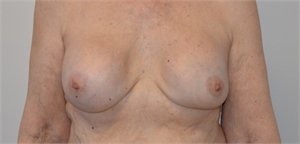 Any time an implant is placed into the body, the body responds by forming a capsule around it. This happens with many implantable devices, including breast implants. Sometimes, for reasons that are not fully understood, the capsule becomes hard and contracts, which can cause distortion and discomfort. Learn more about capsular contracture treatment.
There are 4 grades of capsular contracture in breast implants:
- Grade I capsular contracture: the breast is soft and normally shaped
- Grade II capsular contracture: the breast is firm, but is normally shaped
- Grade III capsular contracture: the breast is firm and is distorted
- Grade IV capsular contracture: the breast is firm, distorted, and painful
When treating capsular contracture, options may include capsulectomy with implant replacement (implant exchange), changing the implant pocket/plane, and in some cases a breast lift to improve breast shape.
Breast Implant Deflation or Rupture
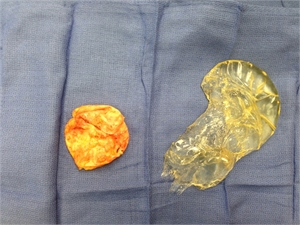 Over time, breast implants can rupture and deflate. If this occurs with a saline breast implant, it may be gradual or sudden, and you may notice a decrease in breast size as the saline leaks out and is absorbed by the body. If a silicone implant ruptures, it can be more subtle because the silicone may remain contained within the capsule.
There are many reasons for breast implant deflation including normal wear and tear as well as trauma. If you think you have a deflated or ruptured breast implant, you should see your plastic surgeon as soon as possible, because over time the breast tissue can contract around the implant and make repair more difficult. The picture to the right shows a deflated silicone breast implant along with the capsule that had formed around it.
To correct a ruptured implant, it is typically necessary to remove the implant (and sometimes part or all of the capsule). A new implant can often be placed at the same time, and other procedures such as a breast lift may be performed as well. Most insurance companies will cover the cost of ruptured breast implant removal, although this typically requires pre-certification.
If you’d like to learn more about implant-related complications and revision options, Dr. Hirsch provides educational resources to help patients understand what to look for and when to schedule an evaluation.
Patient Reviews
I have been waiting for months to do this review & it is longgggg overdue!!! Dr Hirsch is the best of the best! I had a ruptured breast implant for many years & I needed a reduction but did not want any scars! When I first consulted with him it was for a few minutes but he addressed every single concern I had with the reduction & took his time explaining what would be best for me. He ended up placing my implant half over & under the muscle which gave it a natural lift. I went 2 cup sizes smaller for professional purposes. I went in a second time with my boyfriend so he could ask questions as well. And again, Dr Hirsch was nothing but pleasant, honest & very clear in what he was doing. This was a very tough but best decision I made. The day of surgery I felt scared because I was not sure what the outcome would be. I was in surgery for 4 hours ..this goes to show that he really took his time & cared for the patients needs & best result ever.
I was concerned Id need a breast lift & have scars as the implants I had removed were 21 years old..they were old to drink in other words..but they had to go. He is not going to do something that you do not want but will do whats best & natural for the patient. I could never see myself going anywhere else. They look natural and I am no longer a 36D, I am a 34C. There are so many “breast expert ” surgeons you see on tv & plastered all over the place..but Dr Hirsch is really the man & a true hidden gem. He is worth every penny and reasonable. Give him a try….you will not be disappointed
– Jasmin S.
Dr. Elliot fixed a major problem that I was told by three other prominent plastic surgeons could not be fixed. He did a miraculous job and I could not be happier with the results. I would highly recommend him for any plastic surgery procedure.
– Maria P.
Implant Malposition and Double Bubble
Implant malposition can happen when the implant shifts from its intended position, or when the breast tissue stretches over time. This can contribute to concerns such as bottoming out, lateral displacement, asymmetry, and the “double bubble” deformity. Correction may involve adjusting or rebuilding the implant pocket, implant exchange, and/or a breast lift to restore shape and support.
Breast Implant Double Bubble
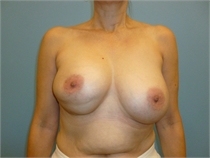 A double bubble breast implant deformity is a condition where a second fold appears in the breast, usually in the lower pole near the chest wall. The causes are unclear although it can occasionally result if the inframammary fold position is lowered during the initial breast augmentation surgery. Patients with a double bubble may notice fullness in the lower part of the breast, or a second fold with additional breast tissue beneath.
To correct a double bubble, Dr. Hirsch may use techniques such as a neosubpectoral pocket combined with a breast lift to reposition the breast implant and remove excess skin. Often, this can be performed in conjunction with a change in breast implants as well.
Recovery After Implant Revision
Recovery depends on what is performed during revision (for example, simple implant exchange vs. capsulectomy with a lift). Most patients return to light activity within about a week and gradually resume normal exercise over 4–6 weeks, based on healing and surgeon guidance.
- Week 1: Focus on rest, incision care, and light walking
- Weeks 2–3: Many patients return to routine daily activities (depending on comfort and job demands)
- Weeks 4–6: Gradual return to exercise and more strenuous activity as cleared by Dr. Hirsch
Frequently Asked Questions
Breast Implant Revision in Los Angeles
What is implant revision surgery?
Implant revision surgery is a procedure to correct or improve the results of a previous breast augmentation. It can involve replacing old implants, changing implant size, addressing complications such as capsular contracture, or improving the overall appearance of the breasts.
Why would I need implant revision?
There are several reasons someone might need corrective breast surgery, including implant rupture, capsular contracture (hardening of scar tissue), dissatisfaction with the size or shape of the implants, rippling, or implant malposition. Some patients also undergo revision surgery to switch from saline to silicone implants or vice versa.
What is capsular contracture, and how is it treated?
Capsular contracture occurs when scar tissue around the breast implant hardens, causing discomfort and distortion in breast shape. Treatment for capsular contracture typically involves removing the hardened tissue (capsulectomy) and, in many cases, replacing the implant.
How long do breast implants last before they need revision?
Breast implants are not lifetime devices. Most implants last between 10 to 15 years, although some may last longer without complications. Patients should monitor their implants for any changes and consult with their surgeon if they experience issues or discomfort.
Can I switch from saline to silicone implants during implant revision?
Yes, many patients choose to switch from saline to silicone implants (or vice versa) during implant revision surgery. Dr. Hirsch will discuss your options and help you choose the best type of implant for your desired result.
What is the recovery process like after revision surgery?
Recovery after implant revision is similar to the recovery from initial breast augmentation. Most patients can return to light activities within a week and resume normal activities after 4-6 weeks. Dr. Hirsch will provide detailed post-operative care instructions to ensure a smooth recovery.
Will breast revision leave additional scars?
In many cases, Dr. Hirsch can use the same incisions from your previous breast augmentation to minimize additional scarring. However, if new incisions are necessary, Dr. Hirsch will strategically place them to ensure they are as discreet as possible.
What complications can be corrected with implant revision?
Revision surgery can address a range of complications, including implant rupture, rippling, capsular contracture, implant displacement (bottoming out, lateral displacement), and dissatisfaction with the size or shape of the implants.
How do I know if I need revision surgery?
You may need surgery if you are experiencing discomfort, changes in breast appearance, or complications such as implant rupture or capsular contracture. Dr. Hirsch will perform a thorough evaluation to determine if revision surgery is right for you.
Can I combine breast implant revision with other procedures?
Yes, many patients choose to combine it with other procedures, such as a breast lift (mastopexy), fat grafting, or liposuction. Dr. Hirsch will discuss your aesthetic goals and recommend the best approach for you.
Call for a consultation
Schedule online today »